
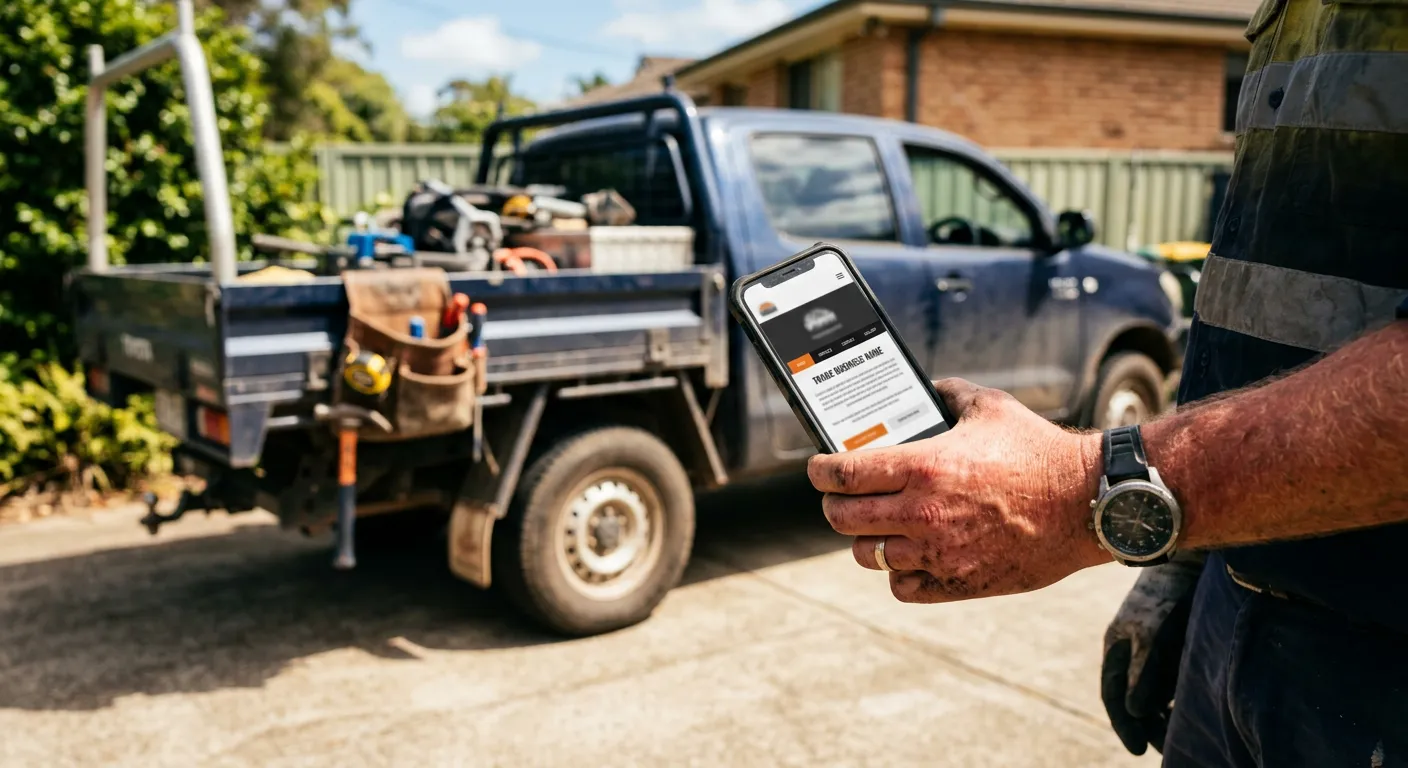
Picture the typical customer looking for a tradie. Their hot water system has just died, or they have finally decided to redo the bathroom, or the switchboard is tripping again. They pull out their phone, search something like "plumber near me" or "electrician Geelong", and look at a handful of results. Within a minute or two, they have called someone.
Your website has a very short window to win that call. It does not need to be fancy. It needs to be fast, clear and trustworthy, and it needs to make contacting you effortless. Here is what we focus on when building websites for tradies.
Speed on a mobile phone
Most of your visitors are on a phone, often on patchy mobile data, sometimes standing in a flooded laundry. If your site takes ages to load, they will hit the back button and call the next result.
Practical steps that make a real difference:
- Compress and properly size your photos. Phone camera images straight off the device are far too large.
- Avoid sliders, autoplay videos and heavy animations on the home page.
- Keep plugins and third-party scripts to a minimum.
- Use decent hosting rather than the cheapest plan available.
As a rough guide, your main pages should feel close to instant on a phone. Free tools like Google PageSpeed Insights will show you where the problems are.
Click-to-call front and centre
For most trades, the phone call is the conversion. Your number should be visible the moment someone lands on the site, and tapping it should start a call immediately.
- Put a tappable phone number in the header on every page.
- Consider a sticky "Call now" button that stays on screen as people scroll on mobile.
- Add a short, simple quote form for people who cannot talk right now. Name, phone, suburb and a description of the job is usually enough.
- Say when you answer. "Calls answered 7am to 6pm, emergency callouts available" sets clear expectations.
Avoid making people hunt for a contact page or fill out a ten-field form. Every extra step loses a few customers.
Clear services and service areas
Customers want to know two things straight away: do you do this type of job, and do you come to my area?
Service pages
Give each main service its own page. A plumber might have separate pages for blocked drains, hot water, gas fitting and bathroom renovations. Each page should explain what you do, common problems you fix, roughly what affects the price, and how to book. This helps customers and also gives search engines a clear signal about what you offer.
Service area pages
List the suburbs and regions you cover. For a Geelong tradie, that might include Belmont, Lara, Torquay, Ocean Grove, Leopold and the Bellarine. A single, well written service areas page is a good start. If you have strong demand in particular towns, individual pages for those areas can help, but only if each one has genuinely useful local content. Thin pages that just swap the suburb name tend to do more harm than good.
Reviews and proof of good work
Trust is everything when you are inviting someone into your home. Your site should make it obvious that you are reliable, qualified and good at what you do.
- Real reviews: display a selection of your Google reviews, with names and suburbs where customers are happy for you to.
- Project photos: before and after shots of your own work beat stock photos every time.
- Licences and insurance: list your licence numbers and mention your insurance cover.
- Real people: a photo of you and your team, ideally in uniform with the van, makes you instantly more approachable.
- Guarantees: if you offer a workmanship guarantee or fixed pricing, say so clearly.
Google Business Profile: your other shop front
For local trades, your Google Business Profile is often seen before your website. It is what shows up in the map results, and for many searches it is the first thing a customer sees.
To get the most out of it:
- Claim and verify your profile if you have not already.
- Choose the most accurate primary category and add relevant secondary ones.
- Set your service areas rather than showing a home address if you work from home.
- Keep your business name, phone number and details consistent with your website.
- Upload photos of real jobs regularly.
- Ask happy customers for reviews and reply to every review, good or bad.
- Link to your website, ideally to the most relevant page.
Your website and profile reinforce each other. The profile gets you noticed, and the website closes the deal by answering the questions the profile cannot.
Show up in AI and voice search too
More customers are asking AI assistants and voice tools for recommendations. These tools tend to favour businesses with clear, consistent information across the web, and pages that directly answer common questions. Adding a short FAQ section to your service pages, covering things like callout fees, typical timeframes and what areas you cover, helps both humans and machines. We explain this in more depth in how AI search engines choose sources.
What you can skip
You do not need a blog with weekly posts, a complex animated design or dozens of pages to win local work. You also do not need to spend a fortune. A focused, well built site of five to ten pages usually does the job. Our guide to website costs in Australia gives typical ranges if you are budgeting.
Get a website that brings in calls
We build fast, mobile-first websites for tradies that are designed to turn searches into phone calls. If you want to see what that looks like for your trade, check out our tradie website design service, or get in touch for a chat about your business.