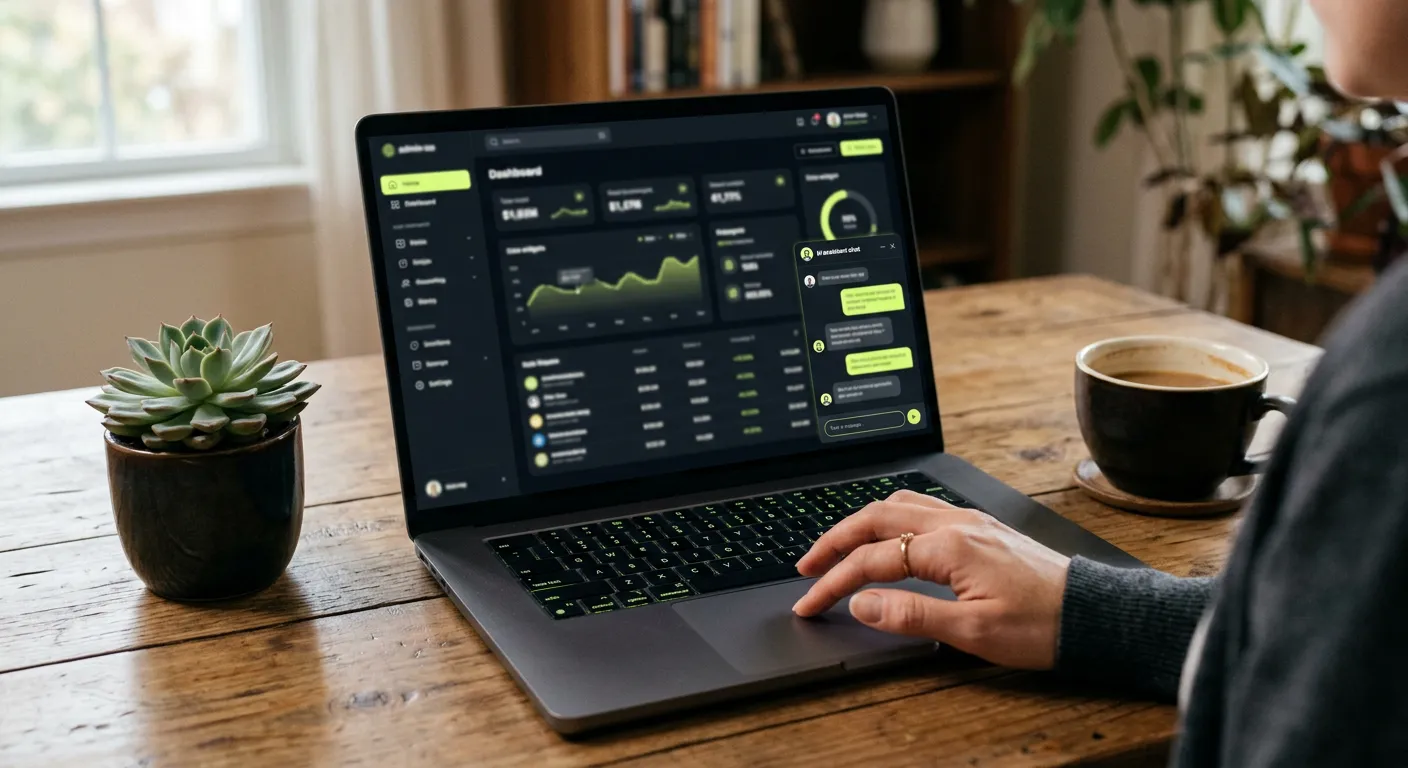

When someone asks ChatGPT, Perplexity or Google a question and gets a written answer back, there is usually a small row of links attached. Those links are the sources the system leaned on, and for a growing number of searches they are the only websites the person ever sees. If your business is not among them, you are effectively invisible for that question.
We get asked about this constantly, so here is our plain English explanation of how these tools pick their sources, where they differ, and what a typical Australian business can realistically do to improve its chances.
The basic process: retrieve, then write
Most AI search products follow a similar pattern, even though the details are kept private. First, the system works out what the person is really asking and often breaks it into several smaller searches. Second, it retrieves a set of candidate pages from a search index. Third, it reads chunks of those pages and decides which passages actually answer the question. Finally, the language model writes a response and attaches citations to the passages it used.
The important point is that the model is not inventing its sources from memory. It is choosing from pages a search system has already found. So the first hurdle is the same as it has always been: your page has to be discoverable and indexed. The second hurdle is newer: once it is found, a specific passage on your page has to be the clearest, most usable answer in the pile.
How the main platforms differ
Google AI Overviews and AI Mode
Google builds its AI answers on top of its own search index and ranking systems. In practice, pages that already rank well for a query, or for closely related queries, are much more likely to be cited. Google's long standing quality signals still matter here: helpful content, a clear sense of who wrote it, a site with a sensible reputation, and good technical health. If you have neglected traditional SEO, AI Overviews will not rescue you.
ChatGPT search
ChatGPT's search feature retrieves results from the web using a combination of its own crawler and partner search indexes. It tends to favour pages with direct answers and well organised information, and it will often cite several sources for different parts of one answer. Whether OpenAI's crawlers can access your site is controlled in part by your robots.txt file, which is worth checking.
Perplexity
Perplexity is the most citation heavy of the three. It searches live, shows its sources prominently and frequently cites smaller, specialist sites if they answer the question cleanly. For niche local and professional questions, we often see it quote a well written service page or FAQ from a small business ahead of a large directory.
The signals that seem to matter most
Nobody outside these companies knows the exact weighting, and anyone claiming otherwise is guessing. From our own testing and the published guidance that does exist, these are the factors that consistently make a difference:
- Relevance at the passage level. A page that answers the exact question in a tidy paragraph beats a page that touches on it somewhere in the middle of a long ramble.
- Crawl access. If your robots.txt blocks AI crawlers, or your content only loads through heavy JavaScript, the system may simply not see it.
- Clear structure. Descriptive headings, short paragraphs, lists and tables make it easy to lift a passage out and quote it accurately.
- Entity clarity. The system needs to understand who you are, what you do and where. Consistent business details across your site, Google Business Profile and directories help.
- Trust and corroboration. Information that agrees with other credible sources is safer to cite. Reviews, mentions and links from reputable Australian sites all add weight.
- Freshness. For topics that change, such as prices, regulations or software, recently updated pages tend to be preferred.
We go deeper on these in our article on what AI citability actually means, including a checklist you can run against your own pages.
What this means for a small business
The encouraging news is that AI search is not purely a big brand game. Because these systems look for the best passage rather than the biggest website, a focused local business can win citations for specific questions. A Geelong physio who clearly explains what to expect at a first appointment, what it costs and whether a referral is needed is well placed to be quoted for that exact question.
The less encouraging news is that vague, generic content performs worse than ever. A services page that says "we provide quality solutions tailored to your needs" gives an AI system nothing to quote. Specifics win: suburbs you cover, typical price ranges, turnaround times, who the service suits and who it does not.
Practical steps you can take now
- Check your robots.txt. Make sure you are not accidentally blocking Googlebot, OAI-SearchBot, PerplexityBot or similar crawlers you want to reach you. Decide deliberately which ones you allow.
- Answer real questions directly. List the ten questions customers ask you most and make sure each has a clear, two or three sentence answer somewhere on your site, ideally under a heading that matches the question.
- Tighten your key pages. Lead with the answer, then explain. Use headings that describe the content rather than clever slogans.
- Add structured data. LocalBusiness, Organization, Service and FAQ schema help machines understand your business and content. If you are on WordPress, our guide to getting started with WordPress SEO covers the basics.
- Keep your details consistent. Same business name, address, phone and service descriptions everywhere they appear.
- Test it yourself. Ask ChatGPT, Perplexity and Google the questions your customers would ask. Note who gets cited and study what their pages do differently.
What not to do
Resist the urge to churn out dozens of AI written articles in the hope of being picked up. Thin, repetitive content is exactly what these systems are designed to filter out, and it can drag down how your whole site is perceived. Likewise, hiding text, stuffing keywords or writing pages aimed at bots rather than people tends to backfire. The approach that works is boring but reliable: be the most useful, clearest and most trustworthy answer for the questions your customers actually ask.
Find out where you stand
If you are not sure whether AI tools can see your site, let alone cite it, that is exactly what our SEO and AI visibility audit is designed to answer. We check crawl access, structure, structured data and how you currently appear in AI answers, then give you a prioritised list of fixes. If you would rather talk it through first, get in touch and we will have a chat.