Geelong has no shortage of people who build websites. There are established studios, solo freelancers, marketing agencies that offer websites as a side service, and plenty of providers further afield happy to work remotely. That is great for choice, but it can make picking the right one hard, especially if you have not been through the process before.
We are a Geelong studio ourselves, so we have an obvious interest here. We have tried to keep this guide genuinely useful regardless of who you end up hiring. These are the questions and checks we would want any business owner to work through.
Start with what you actually need
Before you contact anyone, get clear on what the website is for. That makes quotes easier to compare and conversations far more productive.
- What do you want visitors to do: call, book, enquire or read?
- Roughly how many pages do you need?
- Do you want to update the site yourself, or have someone do it for you?
- Do you need any features beyond the basics, such as bookings or integrations?
- What is your rough budget, both upfront and per year?
If budget is a sticking point, our guide to website costs in Australia gives typical ranges you can use as a starting point.
Look at their work properly
Every designer has a portfolio, but look beyond the screenshots. Visit the live sites on your phone and ask yourself:
- Do they load quickly?
- Is it easy to find the phone number or contact form?
- Is the text easy to read, with clear headings?
- Do the sites look different from each other, or is everything the same template?
- Have they worked with businesses similar to yours?
If you can, contact one or two of their past clients. Ask whether the project ran on time, whether the budget held, and how responsive the designer has been since launch. That last question tells you a lot.
Questions to ask before you sign
These questions cut through sales talk quickly.
- Who will actually do the work? Some agencies subcontract or outsource. That is not automatically bad, but you should know.
- What platform will you build on, and why? A good designer will explain the choice in terms of your needs, not their habits. Our article on WordPress vs website builders covers the main options.
- What is included in the price? Pages, revision rounds, copywriting, images, SEO setup, training and launch support.
- What is not included? This is often more revealing than the inclusions.
- How do you handle speed, security and accessibility?
- What happens after launch? Who does updates, how much does support cost and how quickly do they respond?
- How do you handle SEO if I am replacing an existing site? Listen for mention of redirects and keeping existing rankings.
Ownership: make sure you own your website
This is the area where we see the most problems, and it is worth being firm about.
- Domain name: it should be registered to your business, with your details as the registrant. For a .com.au, that means your ABN.
- Hosting: either in your name, or with a clear written agreement that you can move it at any time.
- Website files and content: once paid for, you should own the site, the copy and any images created for you.
- Logins: you should have administrator access to your site, domain and analytics, even if you never use it.
If a provider will not agree to these, think carefully. Leaving later can mean losing your domain or starting over.
Read the contract
A clear contract protects both sides. Look for:
- A defined scope listing pages and features.
- A payment schedule tied to milestones, such as a deposit, design sign-off and launch.
- The number of revision rounds included, and the rate for extra changes.
- Expected timeframes, including what happens if content is delayed.
- Ongoing fees, with the minimum term and cancellation terms spelled out.
Be wary of long lock-in contracts, particularly "free" or "$0 upfront" websites paid off monthly over several years. Add up the total and compare it with a standard build plus hosting. Also be cautious of anyone guaranteeing first page rankings. Nobody controls search results.
Local or remote: does it matter?
There are real advantages to working with someone based in Geelong or nearby.
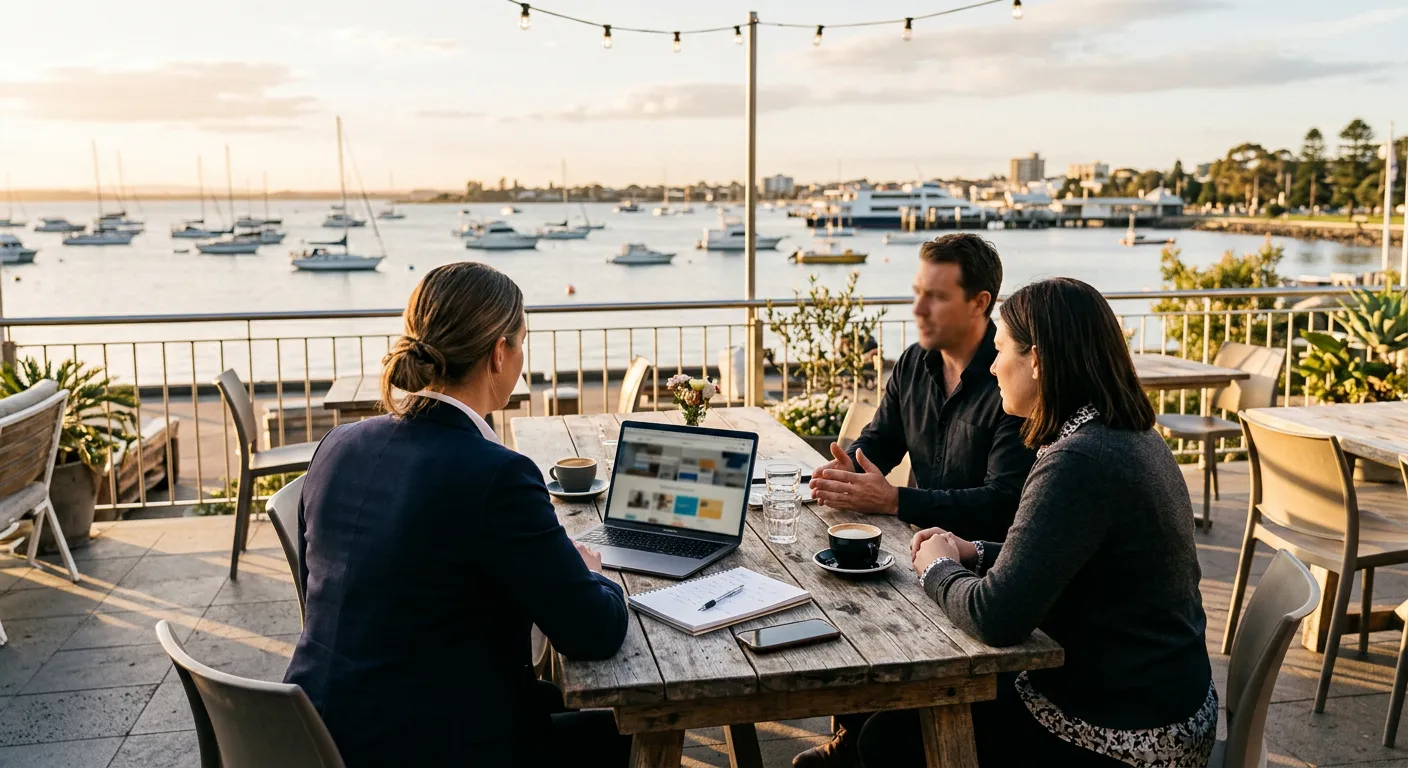
- You can meet face to face, which helps for planning sessions and training.
- They often know the local market, the suburbs and the competition.
- They are in the same time zone and often easier to get hold of.
- Local relationships and referrals add accountability.
That said, location is not the most important factor. Many good designers work remotely with clients across Australia, and video calls work well for most projects. What matters most is skill, clear communication, honest advice and ongoing support. A local designer who disappears after launch is worse than a remote one who answers emails promptly.
If you work with someone overseas, check time zones, Australian consumer law protections and whether they understand local expectations, such as how Australians search and what local trust signals look like.
Trust your gut on communication
Finally, pay attention to how the early conversations feel. Do they ask about your business and customers, or jump straight to colours and features? Do they explain things in plain English? Do they give straight answers on price? Will they tell you if something you want is unnecessary? The way a designer communicates before you sign is usually how they will communicate during the project.
Talk to a Geelong studio
If you are a Geelong business looking for a website, we would be happy to have a no-pressure chat. We give fixed quotes, you own everything we build, and we stick around after launch. Take a look at our portfolio, read about our WordPress website design service, or get in touch to arrange a time to talk.